
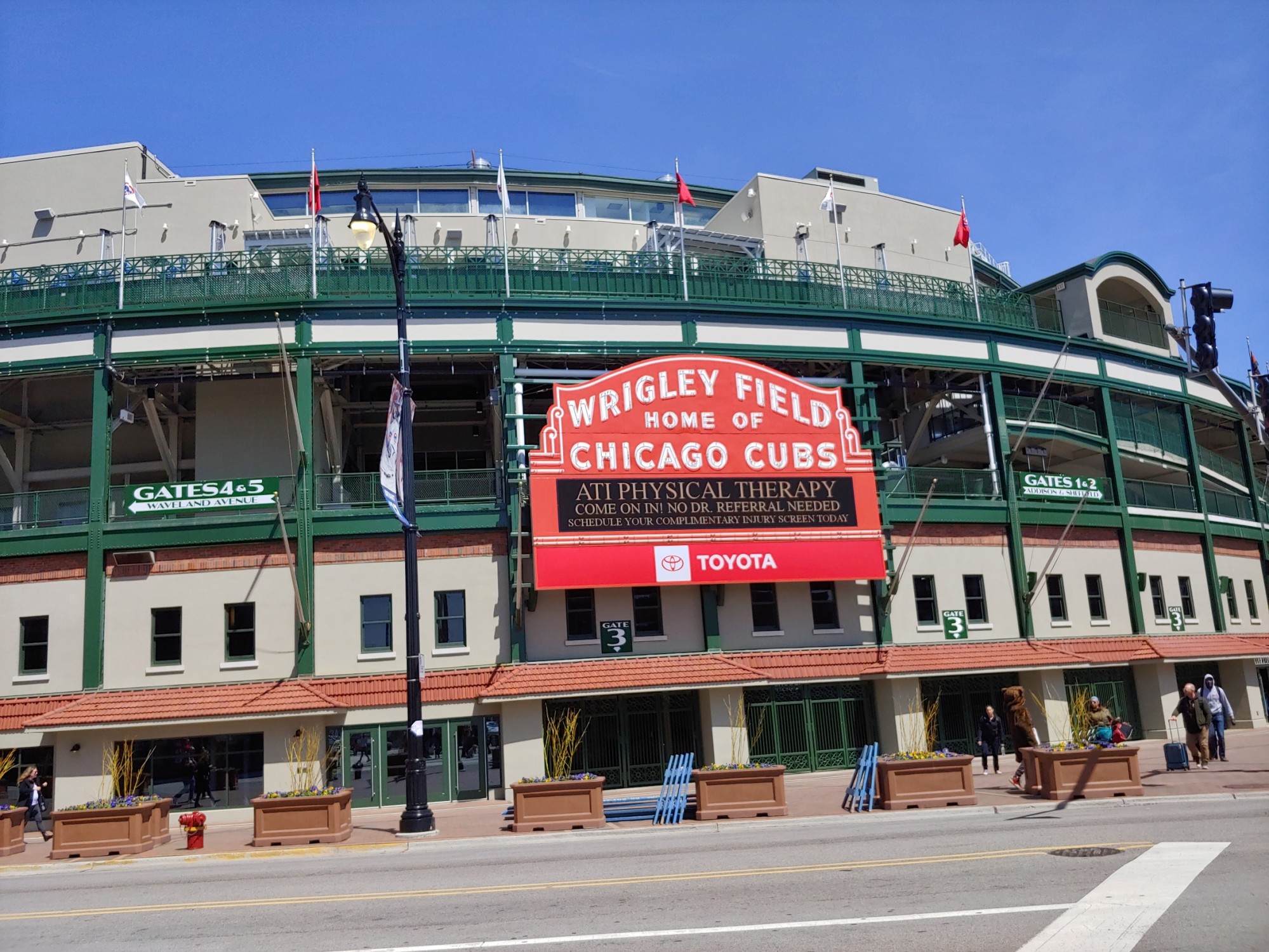
What’s the Appeal? Lake View is among Chicago’s most diverse communities, offering a full urban smorgasbord of attractions. Start at the lakefront, with its boat harbors, bike path, ball fields, tennis courts, golf course, bird sanctuary and views of shimmering Lake Michigan, then work west past a mix of high rises, old mansions and stately low-rise apartment buildings to the wide array of restaurants, bars and entertainment venues along Broadway and Halsted. Then, cruise down always lively Clark Street to the heart of Wrigleyville, where everything “Cubs” is always in fashion. But the excitement doesn’t stop there, as a stroll along either Southport Avenue or Lincoln Avenue will quickly demonstrate. But Lake View isn’t all about going out for fun. It also offers a range of surprisingly tranquil neighborhoods, ranging from the Alta Vista Terrace Landmark District to the turn-of-the-century charms of Graceland West.
Where Is It? Lake View today is bounded by Diversey Parkway on the south, Ravenswood Avenue on the west and its north border wraps around Graceland Cemetery, so that west of Clark Street the border is Montrose Avenue while east of Clark Street the border is Irving Park Road. It includes some well-known areas, such as Wrigleyville and Boys Town, that seem to blend into each other. The large strip of parkland and the Lake Shore Drive roadway that now form the elegant front yard of Lake View are relatively recent additions. All that acreage is landfill that was created in the 1920s.
What’s in the Name? Lake View can be confusing because the area that bears that name today is a much smaller version of the original Lake View, which began as a township in 1857 and took its name from a popular hotel and resort, Lake View House, built in 1854 at what was then the shore of Lake Michigan at the current intersection of Lake Shore Dr. and West Sheridan Road (Byron Street). The township, which is still recognized for certain legal purposes, such as property tax assessment, runs from Fullerton Avenue on the south to Devon Avenue on the north, and from the lake west to Western Avenue. Today’s Lake View community area is just a small part of the original township. A final bit of confusion about Lake View arrived in the 1970s when local real estate developers and brokers began compressing the community’s name into a single word, Lakeview, and that spelling has become widely used, so that today, the Chicago Tribune refers to the area as Lakeview, while the Chicago Sun-Times calls it Lake View. The choice is yours, but from a historic perspective, Lake View is correct.
Who Were the Earliest Residents? Native American tribes regularly camped in what is now Lake View, but when they were expelled in the 1830s, farmers from Germany, Switzerland, Britain, Luxemburg and Sweden were among the first to move in. Along the lake, however, wealthier Chicagoans established impressive residences. Toward the end of the 19th Century, industry began arriving in Lake View’s western portions, attracting more immigrants, with Germans predominating. The 20th Century brought new groups to the area, especially in the years immediately after World War II when sizable Jewish and Japanese-American communities took root, followed by new arrivals from Appalachia and Latin America.
Claims to Fame: There’s little question that Lake View is best known these days as the home of Wrigley Field and the Chicago Cubs. Baseball fans and the just plain curious arrive daily from all points on the compass to take selfies at the corner of Clark and Addison streets. Addison Street, by the way, is named after the doctor who diagnosed Addison’s disease, and Clark Street honors George Rogers Clark, the Revolutionary War hero. Lake View, home to one of the nation’s largest LGBTQ communities, also plays host to one of the biggest, most colorful Gay Pride Parades each summer. Graceland Cemetery, surrounded on two sides by Lake View, though technically in Uptown, is another nationally renowned highlight, famous as the final resting place of such famous folks as Ludwig Mies van der Rohe, George Pullman, Marshall Field, Ernie Banks, Louis Sullivan, Daniel Burnham, Cyrus McCormick, Jack Johnson and Alan Pinkerton, but also admired for its lovely landscaping and architecturally distinguished monuments and tombs.

AWARD WINNING SERVICES

GLOBAL REACH & HOME INSURANCE



WEBSITE AWARDS



Market Report
Sign up today to stay updated on what’s happening in your local real estate market.
